

Non-Surgical Facial Contouring: Your Options Explained
Last updated on June 24, 2026
Understanding Facial Contouring Without Surgery
The term non-surgical face contouring can be confusing because it does not refer to one single treatment. It may describe a range of non-surgical approaches that aim to support facial contour, firmness, structure or definition without surgical lifting.
So, what is a non-surgical facelift exactly? In this blog, we explain what the term may refer to, the different treatment approaches that may be included, what they may help address and why individual assessment matters before deciding whether any option may be suitable.
What Is a Non-Surgical Facelift?
A non-surgical facelift is a broad term used to describe treatments that may aim to support the appearance of facial firmness, contour, structure or definition without surgery. It is not one standard procedure, and the term can include different approaches depending on the person’s skin, facial anatomy and treatment goals.
It is also important to understand what the term does not mean. A non-surgical facelift is not the same as a surgical facelift, and it does not remove excess skin in the same way. Instead, non-surgical facial contouring approaches may work through tissue support, volume and contour planning, skin firming or a combination of methods, depending on suitability.
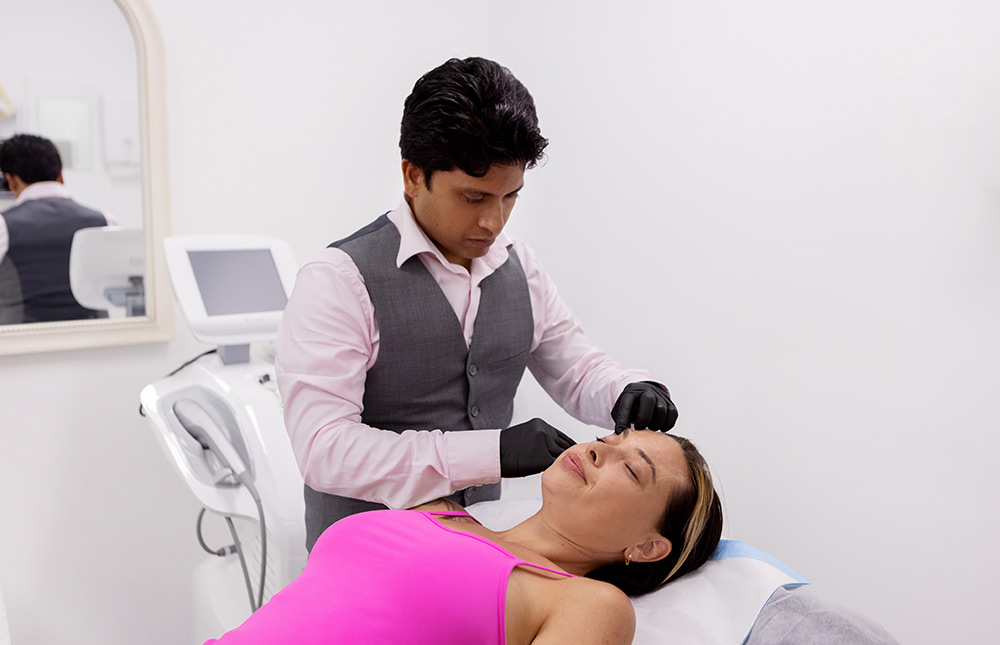
Non-surgical facial contouring may involve different approaches depending on skin quality, facial anatomy and treatment goals.
What May Non-Surgical Facial Contouring Help Address?
Non-surgical facial contouring may be considered when the aim is to support the appearance of facial definition, mild visible laxity, skin firmness or contour. The concern may relate to one area, such as the jawline or lower face, or it may involve several factors that affect how the face appears overall. The treatment approach depends on what is contributing to the visible concern.
This may include:
- Mild visible laxity
- Changes in jawline definition
- Lower-face heaviness
- Changes in facial contour
- Volume-related changes
- Skin firmness
- Changes in facial structure or support
Different Types of Non-Surgical Facial Contouring
Non-surgical facial contouring can involve different treatment approaches, and they do not all perform the same role. Some are designed to provide support or repositioning, some focus on facial contour or structure, and others may help support the appearance of firmness where mild laxity is part of the concern.
Thread-Based Lifting
Thread-based lifting is one of the treatment categories more closely associated with non-surgical facial lifting. It involves placing specialised threads beneath the skin to provide support or reposition tissue in selected areas, such as the lower face, cheeks, jawline or brow area, depending on suitability and treatment planning.
Volume and Contour-Based Approaches
Some non-surgical facelift plans focus on facial volume, contour and structural support rather than physically repositioning tissue. This may be relevant where changes in facial proportion, definition or support are contributing to the appearance of heaviness or reduced contour.
Energy-Based Tightening Treatments
Energy-based treatments, such as radiofrequency or ultrasound-based approaches, may be considered where the aim is to support the appearance of skin firmness or mild laxity. These treatments do not lift the face in the same way as thread-based approaches, but they may support collagen remodelling and the appearance of skin firmness.
Combination Treatment Plans
A non-surgical face-lifting plan may involve more than one approach because facial changes can involve skin firmness, contour, volume, support and tissue position. Where suitable, combining different approaches may allow the treatment plan to consider more than one contributing factor.

A non-surgical facelift is not one single treatment, so assessment helps identify which approach may be suitable.
What Non-Surgical Facial Contouring Cannot Do
Non-surgical facial contouring has limits, and those limits should be clear before treatment is considered. These approaches may be considered in selected cases, but they do not create the same type of change as surgical facial lifting.
Non-surgical facial contouring cannot:
- Remove excess skin
- Produce the same degree of change as a surgical facelift
- Suit every type of facial laxity or tissue descent
- Guarantee a specific result
- Replace assessment, treatment planning or realistic expectations
How Suitability Is Assessed
Suitability for non-surgical facial contouring depends on several factors, including skin quality, degree of laxity, facial anatomy, volume distribution, previous treatments, medical history and treatment goals. The area of concern also matters, as the jawline, cheeks, lower face, and neck may each require a different approach.
Assessment helps identify what is actually contributing to the concern. In some cases, the issue may relate mainly to skin firmness. In others, it may involve facial contour, volume change, tissue position or a combination of factors.
Why Assessment Matters Before Choosing a Treatment
Non-surgical facial contouring can involve different treatment approaches, and while there may be some overlap between them, each approach has a different role in treatment planning. The starting point should be what is contributing to the visible concern, such as skin firmness, mild laxity, facial contour, volume change or tissue position.
At Prophile Clinics, we assess the skin, facial structure, medical history and treatment goals before discussing non-surgical facial contouring options. This helps ensure any recommendation is based on suitability, realistic expectations and the type of change the treatment may be able to support.
Choosing the Most Appropriate Non-Surgical Facial Contouring Option
Non-surgical facial contouring is best understood as a broad category rather than a single treatment. Thread-based lifting, volume and contour-based approaches, energy-based tightening treatments and combination plans may all sit within the wider discussion, but they do not work in the same way or address the same concerns.
The most appropriate approach depends on your skin, facial anatomy, treatment goals and whether a non-surgical treatment is suitable for your concerns. To learn more about your options or discuss what may suit your needs, contact us for more information or to arrange an assessment at Prophile Clinics.
How to book an appointment
To book an appointment, please call us on +61485 960 001, email us at admin@prophileclinics.com.au, or book online via the form below.
FAQs
How long does a non-surgical facelift take to show visible changes?
The timeframe can vary depending on the treatment type, the area treated and the individual response. Some approaches may create a more immediate visible change, while others rely on gradual tissue response, collagen remodelling or staged treatment planning. During assessment, the expected timeline should be explained in relation to the treatment being considered.
Are non-surgical facelift results permanent?
Non-surgical facelift results are not permanent. The duration of visible change can vary depending on the treatment approach, skin quality, facial anatomy, lifestyle factors and maintenance planning. Some people may consider ongoing treatment at intervals, while others may decide that a different approach is more suitable as their concerns change over time.
Is there downtime after a non-surgical facelift?
Downtime depends on the type of non-surgical facial contouring treatment being considered. Some approaches may involve temporary swelling, redness, tenderness or sensitivity, while others may require more specific aftercare. The expected recovery period should be discussed before treatment so you understand what may be involved.
Can non-surgical facial contouring include the neck?
Some non-surgical facial contouring plans may include the neck, where suitable, particularly if skin firmness, contour or visible laxity in that area is part of the concern. The neck can respond differently from the face, so assessment is important before deciding whether a non-surgical approach is likely to be appropriate.
Can non-surgical facial contouring be combined with skin-focused treatments?
In some cases, non-surgical facial contouring may be planned alongside skin-focused treatments that address texture, tone or overall skin quality. These treatments do not all perform the same role, so timing and suitability matter. A staged plan may be considered where different concerns need to be addressed separately.





 Online Marketing For Doctors

