

What Causes Uneven Skin Tone and How It Develops
Last updated on October 6, 2026
Uneven skin tone is caused by several different processes rather than one. Increased melanin, reduced melanin, vascular redness and changes in surface texture can each make the complexion look less uniform, and more than one is often present at the same time.
Uneven skin tone can take several forms, and the difference is not always obvious from appearance alone. Darker pigmentation, lighter patches, redness, inflammation and surface dryness can all make the complexion look less uniform, even though they do not develop through the same process.
Examining where the change occurs, when it began, and whether other symptoms are present provides a more useful starting point than treating every patch in the same way, which is what this article covers in detail.
What Does Uneven Skin Tone Mean?
Uneven skin tone can refer to several different changes in the skin. Some areas may appear darker because of increased melanin, while others can look lighter because pigment production has reduced. Redness and flushing may also create uneven colour without melanin being the main issue.
The skin’s surface can influence its appearance too. Dryness, roughness and inflammation affect how evenly light reflects from the skin, sometimes creating a dull or patchy appearance even when pigment has not changed significantly. This is why it is important to establish whether the concern mainly involves pigmentation, redness, texture or a combination of these factors.
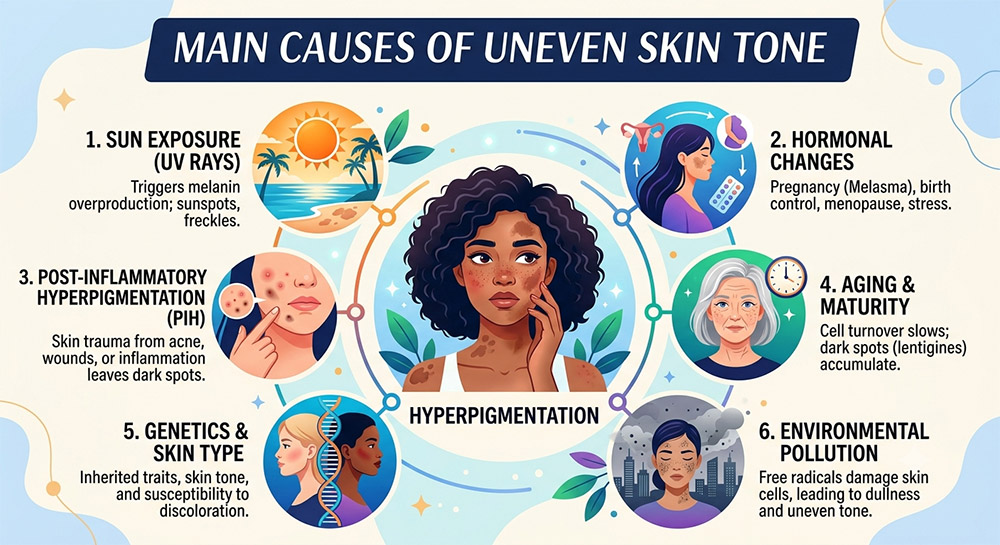
Uneven skin tone may involve pigmentation, redness, texture or several overlapping changes.
The Main Causes of Uneven Skin Tone
Several processes can alter the colour and overall appearance of the skin. More than one may be present at the same time, particularly when inflammation, sun exposure and an existing pigmentary tendency overlap.
How Sun Exposure Causes Uneven Skin Tone
Ultraviolet radiation stimulates melanin production and contributes to cumulative changes in exposed skin. The forehead, nose and cheeks may gradually develop freckles, solar lentigines or more diffuse pigmentation, particularly when sun protection has been inconsistent.
How Inflammation and Skin Injury Affect Skin Tone
Acne, eczema, irritation, burns and other skin injuries can leave post-inflammatory hyperpigmentation as they settle. Less frequently, inflammation may temporarily reduce pigment production and leave a lighter area instead.
How Hormonal Changes Affect Pigmentation
Hormonal changes associated with pregnancy, hormonal contraception or hormone therapy can affect melanocyte activity. Melasma is one example, generally creating broader, symmetrical areas of pigmentation across sun-exposed parts of the face.
Vascular Redness and Uneven Skin Tone
Not every uneven area contains excess pigment. Rosacea, dermatitis, skin sensitivity and visible superficial blood vessels can produce red or flushed areas that require a different approach from melanin-related changes.
Reduced or Lost Pigmentation
Lighter patches may develop after inflammation, but they can also be associated with vitiligo and some superficial skin infections. Clearly defined, spreading, or unexplained areas of pigment loss should not automatically be treated as ordinary uneven tone.
What Does Your Skin Change Look Like?
| If it looks like | It’s likely related to |
|---|---|
| Brown or tan patches | Melanin-related pigmentation from sun exposure or hormones |
| Marks that appeared after acne or irritation | Post-inflammatory hyperpigmentation |
| Red or flushed areas | Vascular or inflammatory causes |
| Lighter or pale patches | Reduced or lost pigmentation |
This table is a general guide only and is not a diagnosis. If you notice a new, changing or unexplained skin change, please see a doctor or dermatologist for assessment.
What Can Make Uneven Skin Tone More Noticeable?
Everyday habits are not always the underlying cause of uneven skin tone, but they can make existing colour differences more noticeable. Repeated irritation is particularly relevant because it may keep inflammation active and contribute to further discolouration.
Factors that can make uneven skin tone more noticeable include:
- Inconsistent sun protection
- Picking or squeezing blemishes
- Repeated irritation from unsuitable products
- Excessive or poorly tolerated exfoliation
- Dryness that makes the surface appear rough or dull
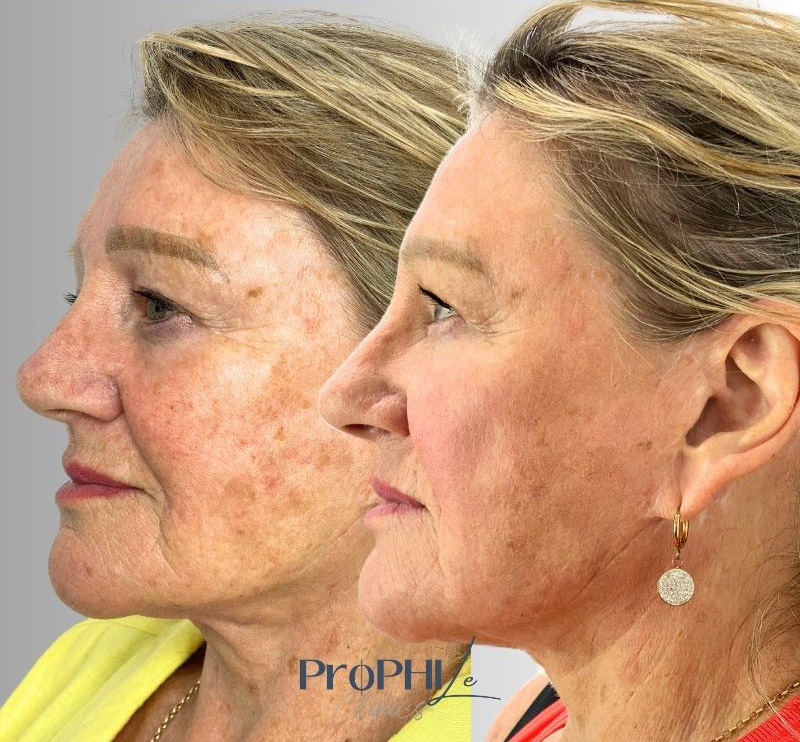
The colour and distribution of a skin change can provide useful information about its underlying cause.
Can Uneven Skin Tone Change Over Time?
Post-inflammatory marks may gradually fade, although the timeframe depends on the original inflammation, the location of the pigment and the individual’s skin type. Further ultraviolet exposure or repeated irritation can darken these areas or prolong their visibility.
Other patterns may be more persistent or variable. Melasma can fluctuate with hormonal and environmental influences, while vascular redness may change with temperature, irritation and individual triggers. One type of unevenness may improve while another remains, particularly when pigmentation, redness and texture are all contributing to the overall appearance.
When Should a Change in Skin Colour Be Assessed?
A new colour change is not always purely cosmetic. Assessment is particularly important when an area develops rapidly, continues spreading, becomes painful or itchy, or is accompanied by scaling, crusting or bleeding.
An individual spot that changes in colour, shape or size should also be examined appropriately. The same applies to irregular pigmentation or sharply defined areas of pigment loss, which should not be managed through cosmetic skincare alone without first clarifying what they represent.
How Uneven Skin Tone Is Approached
There is no single approach to uneven skin tone, since the right course depends on which type of change is present. Melanin-related pigmentation, post-inflammatory marks, vascular redness and pigment loss are not managed in the same way, which is why identifying the underlying cause matters before considering any cosmetic option.
Some people may choose to explore professional skin treatment options once the type of change has been clarified, particularly where the concern is melanin-related or has followed inflammation. Outcomes vary between individuals, and areas linked to pigment loss or an unclear cause should be assessed before any treatment is considered.
Key Takeaways: What Causes Uneven Skin Tone
- Uneven skin tone may reflect changes in pigment, inflammation, blood vessels, texture, or several of these factors together.
- Working out which change is most relevant helps avoid unsuitable skincare.
- It also creates more realistic expectations about what may settle over time on its own.
At Prophile Clinics, we consider the pattern of colour change alongside skin type, history, current products and possible triggers. Any recommendations can then be based on the individual presentation rather than treating uneven skin tone as one condition with one solution.
How to Book an Appointment
To book an appointment, please call 0485 960 001, email us at admin@prophileclinics.com.au, or book online via the form below.
Frequently Asked Questions About Uneven Skin Tone
Why does my skin tone look more uneven during summer?
Increased ultraviolet exposure can stimulate pigment production and darken existing areas of hyperpigmentation. Heat may also make vascular redness more noticeable, so not every summer change is necessarily caused by melanin.
Why can acne marks last longer in darker skin tones?
Skin with more active pigment production can develop a stronger response following inflammation. The resulting marks may remain visible for longer, particularly with further irritation or sun exposure.
Can picking at blemishes cause dark marks?
Picking can prolong inflammation and create additional injury, increasing the likelihood of post-inflammatory hyperpigmentation. It may also contribute to scarring, which affects texture as well as colour.
Are freckles considered uneven skin tone?
Freckles are localised areas of increased pigment and can contribute to a less uniform appearance. They are generally benign, although a spot that changes independently of surrounding freckles should be assessed.
Can medication affect skin pigmentation?
Some medicines can contribute to pigmentation changes or increased sensitivity to light. Medication should not be stopped without advice, but new colour changes can be discussed with the prescribing clinician.
Why do some areas become lighter after inflammation?
Inflammation can temporarily interfere with normal pigment production, resulting in post-inflammatory hypopigmentation. Persistent or spreading pale areas may require assessment to exclude another condition.
Can redness be mistaken for pigmentation?
Yes. Persistent redness, flushing and visible blood vessels can make skin colour appear uneven without involving excess melanin. This is why identifying whether a change is red, brown, grey or lighter than the surrounding skin is important before choosing skincare or considering further assessment.
Can unsuitable skincare make pigmentation darker?
Products that repeatedly irritate the skin may contribute to inflammation and subsequent discolouration. More intensive product use is not necessarily more helpful, particularly when the skin is already reactive.
How long can post-inflammatory pigmentation remain visible?
Post-inflammatory pigmentation usually lasts a few months to a year, sometimes longer. Superficial marks often fade within 3–6 months, while deeper pigment changes can take a year or more, and in some cases persist without treatment. Skin type, sun exposure, and repeated inflammation all affect how long it lasts.
Can uneven skin tone return after it improves?
Yes, particularly when the underlying influence remains present. Sun exposure, hormonal changes and recurrent inflammation can reactivate existing pigmentation or create new areas of unevenness.

August 25, 2026

August 18, 2026

August 11, 2026

August 4, 2026

July 22, 2026
 Online Marketing For Doctors

