

What Causes Melasma? Triggers and Contributing Factors
Last updated on October 6, 2026
Melasma is caused by an interaction between three things rather than any one of them: an inherited tendency towards pigmentation, hormonal sensitivity, and exposure to ultraviolet and visible light. Because the tendency persists, the factors that keep melasma active are often not the same ones that first triggered it.
Melasma can appear during a period of hormonal change, become less visible and then return following further light exposure. This can make the condition seem unpredictable, but its behaviour is often shaped by several internal and environmental influences acting together.
Understanding what causes melasma means looking beyond hormones alone. Genetic predisposition, ultraviolet radiation, visible light and hormonal sensitivity can all contribute
What Does Melasma Look Like?
Melasma is a form of hyperpigmentation that most often produces brown or grey-brown patches across sun-exposed areas of the face. The cheeks, forehead, upper lip and bridge of the nose are frequently affected, with pigmentation generally appearing on both sides in a broadly symmetrical pattern.
This distribution can help distinguish melasma from isolated freckles or sun spots, but appearance alone is not always conclusive. Post-inflammatory hyperpigmentation, medication-related changes and other pigmentary conditions can sometimes create a similar presentation.
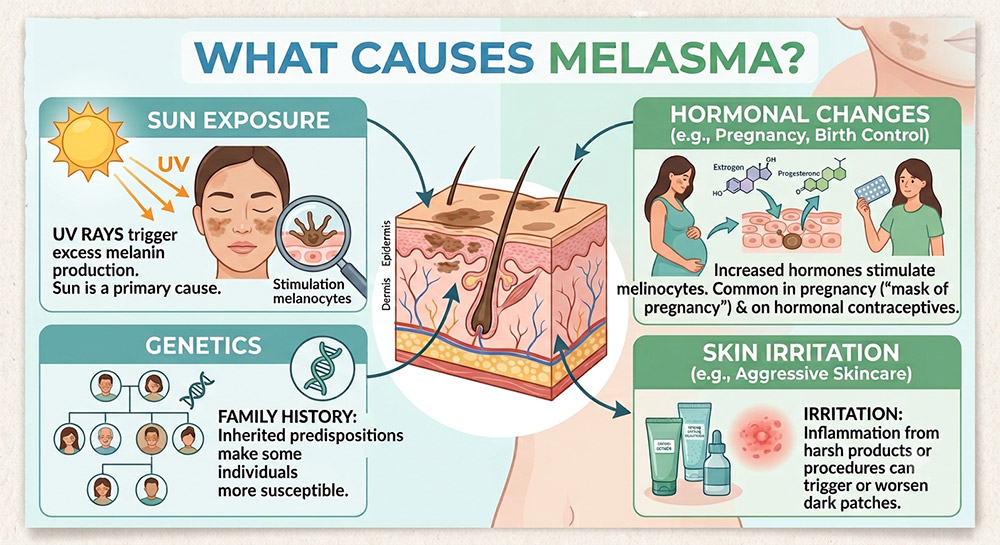
Melasma often follows a symmetrical facial pattern, although its intensity and distribution can vary.
The Main Influences on Melasma
Three influences are central to most presentations of melasma: hormonal sensitivity, exposure to light and genetic predisposition. Their relative importance varies, which is why the condition does not develop or behave identically in everyone.
How Hormonal Sensitivity Contributes to Melasma
Pregnancy, hormonal contraception and hormone therapy are recognised associations, although most people experiencing these hormonal changes do not develop melasma. Hormones appear to influence melanocyte activity in susceptible skin rather than acting as a universal or independent cause.
How Ultraviolet and Visible Light Affect Melasma
Ultraviolet radiation can stimulate melanocyte activity and make existing melasma more noticeable. Visible light may also contribute, particularly in more deeply pigmented skin types, meaning daylight exposure can remain relevant even when sunburn does not occur.
Genetic Predisposition to Melasma
Melasma often occurs in people with a family history of the condition and is seen more frequently in skin types that tan readily or develop a stronger pigment response. Genetics influence susceptibility, but they do not determine precisely when melasma will appear or how persistent it will be.
What Triggers Melasma and What Keeps It Active?
Melasma may first develop when a person with an underlying tendency towards pigmentation experiences a relevant trigger, most often a hormonal change or increased exposure to light. Pregnancy, hormonal contraception and hormone therapy are recognised associations, while ultraviolet and visible light can activate pigment production in susceptible skin.
Once melasma has appeared, repeated light exposure can continue to darken the patches or contribute to recurrence, even after the original hormonal trigger has passed. Heat may make melasma appear more noticeable for some people, but its role is less clearly established than the effects of ultraviolet and visible light.
| What first triggers it | What keeps it active |
|---|---|
| Hormonal changes | Ongoing ultraviolet (UV) exposure |
| Pregnancy | Visible light (e.g., HEV / blue light) |
| Hormonal contraception | Repeated skin irritation |
| Hormone therapy | Heat (less established role) |
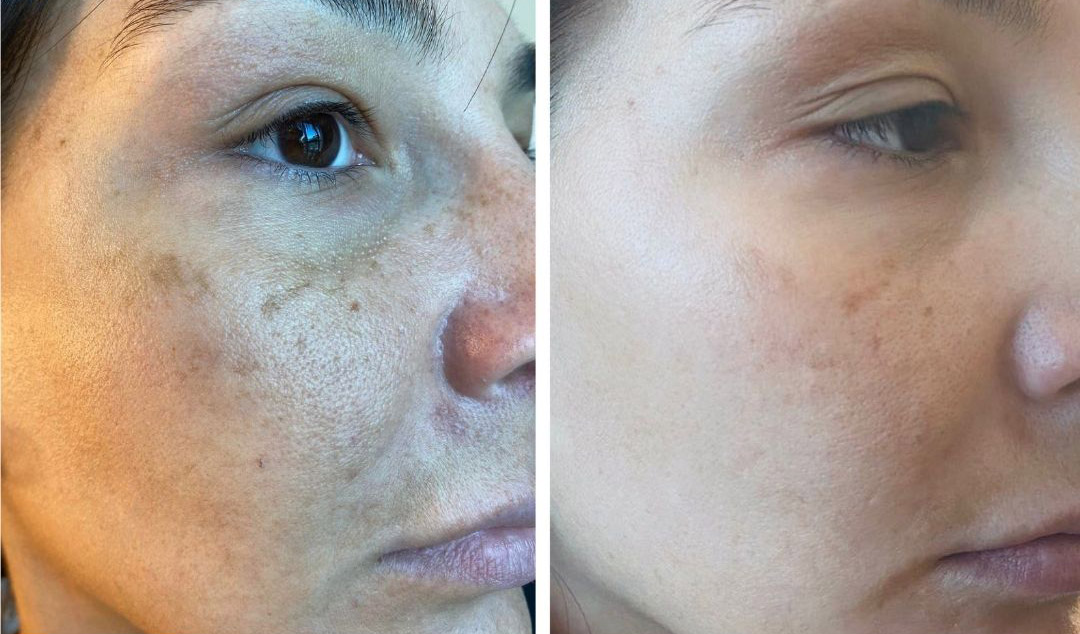
Hormonal sensitivity, light exposure and genetic predisposition can interact in the development of melasma.
Why Melasma Can Fade and Return
Melasma involves more than an isolated increase in surface pigment. Research has identified changes involving melanocyte activity, the epidermis, the upper dermis, blood vessels and signalling within chronically sun-exposed skin, which helps explain why its behaviour can be complex.
Even when the patches fade, the skin may remain prone to renewed pigment production. Further light exposure or hormonal change can therefore lead to recurrence without meaning that previous management was unsuccessful.
How to Manage Melasma Triggers Day to Day
Daily management focuses on reducing avoidable stimulation without creating additional inflammation. A consistent routine is generally more useful than alternating between minimal care and periods of intensive skincare.
Depending on individual skin needs, helpful measures may include:
- Applying broad-spectrum SPF 50+ sunscreen as directed
- Using hats, shade and other physical forms of sun protection
- Considering visible-light protection, such as sunscreens containing iron oxide, where clinically appropriate
- Avoiding products that repeatedly sting or inflame the skin
- Discussing suspected hormonal or medication triggers with the prescribing clinician
For those looking to explore options beyond daily management, professional skin treatment options can be discussed as part of a broader assessment.
Why an Accurate Melasma Diagnosis Matters
Melasma itself is benign, but not every facial pigment change is melasma. Establishing the likely diagnosis helps distinguish it from post-inflammatory hyperpigmentation, solar lentigines and other conditions that may require a different approach. The pattern, history, possible triggers and previous skin response can all help clarify what is most likely to be involved. This is more useful than trying to determine the cause of pigmentation from colour alone.
Key Takeaways: What Causes Melasma
- Melasma is better understood as a long-term pigmentary tendency than a mark with one isolated cause.
- Hormonal, genetic and environmental influences combine, and their relative importance varies between individuals.
- Ongoing trigger management may remain relevant even when pigmentation becomes less visible.
At Prophile Clinics, we assess these influences before discussing an individual skin plan. The aim is to build that plan around the pattern of recurrence and the factors that can realistically be managed, without suggesting that melasma can always be removed permanently
How to Book an Appointment
To book an appointment, please call 0485 960 001, email us at admin@prophileclinics.com.au, or book online via the form below.
Frequently Asked Questions About Melasma
Can men develop melasma?
Yes, melasma can affect men, although it is diagnosed more frequently in women. Light exposure, genetic susceptibility and hormonal influences may still contribute when pregnancy or hormonal contraception is not relevant.
Is melasma hereditary?
Melasma is not inherited in a simple, predictable pattern, but family history can increase susceptibility. Environmental and hormonal influences still help determine whether that susceptibility becomes visible.
Does pregnancy always cause melasma?
No. Pregnancy is a recognised trigger, but most pregnant individuals do not develop melasma, and those who do can experience different patterns and severity.
Can melasma occur somewhere other than the face?
Melasma primarily affects sun-exposed facial areas, although pigmentation can occasionally appear on other exposed sites such as the forearms. Changes outside the typical distribution should be assessed rather than automatically labelled as melasma.
Can light through windows affect melasma?
UVA can pass through ordinary window glass and may remain relevant during extended exposure near windows or while driving. Its practical significance depends on the individual pigmentation pattern and overall exposure.
Does melasma become lighter during winter?
Some people notice reduced pigmentation when daylight exposure decreases, but this is not universal. Melasma can remain visible throughout the year because its underlying susceptibility does not disappear seasonally.
Can skincare products worsen melasma?
Yes. Skincare products that cause repeated inflammation or irritation can make melasma harder to manage. This is especially common when several exfoliating or active ingredients are introduced at once, since the resulting irritation can trigger more pigmentation.
Is melasma harmful to physical health?
Melasma is generally benign and does not become skin cancer. Assessment remains important when the diagnosis is uncertain, or an individual area changes differently from the surrounding pigmentation.
Should hormonal contraception be stopped if melasma develops?
Hormonal contraception should not be stopped or changed without advice from the prescribing clinician. Its possible contribution can be reviewed alongside the medical reasons for using it and the available alternatives.
Can melasma disappear after pregnancy?
Pregnancy-associated melasma may fade as hormone levels change, but complete resolution cannot be assumed. Continued light protection can remain important because the underlying susceptibility may persist.

August 25, 2026

August 18, 2026

August 11, 2026
August 4, 2026

July 22, 2026
 Online Marketing For Doctors

