

How UV Exposure Contributes to Pigmentation Over Time
Last updated on October 6, 2026
UV exposure contributes to pigmentation by prompting melanin-producing cells to increase pigment output, and because that response becomes uneven over years of repeated exposure, sun-related pigmentation often surfaces long after the exposure that caused it.
What Is the Link Between UV Exposure and Pigmentation?
UV exposure and pigmentation are connected through a process that is rarely obvious at the time. The sun’s effect on skin tone tends to develop quietly, often over many years, before settling into a patch, spot or area of uneven tone. That delay between cause and effect is part of what makes pigmentation difficult to explain once it eventually appears.
Melanin, the pigment that gives skin its colour, sits at the centre of this process. It also forms part of the skin’s natural defence against ultraviolet light. Understanding how melanin behaves under repeated sun exposure helps explain why pigmentation develops and why it rarely develops evenly across the face or body.
How Does Melanin Respond to UV Light?
When skin is exposed to UV radiation, melanin-producing cells respond by increasing pigment output. This is what causes a tan, and it reflects the skin’s attempt to protect itself from further exposure. It is a normal, protective response rather than a sign that something has gone wrong.
Over years of repeated exposure, this response can become uneven. Some areas of skin produce more pigment than others, and that unevenness is often where visible pigmentation begins. Skin type, genetics and how consistently sun protection has been used all play a part in how this unfolds.
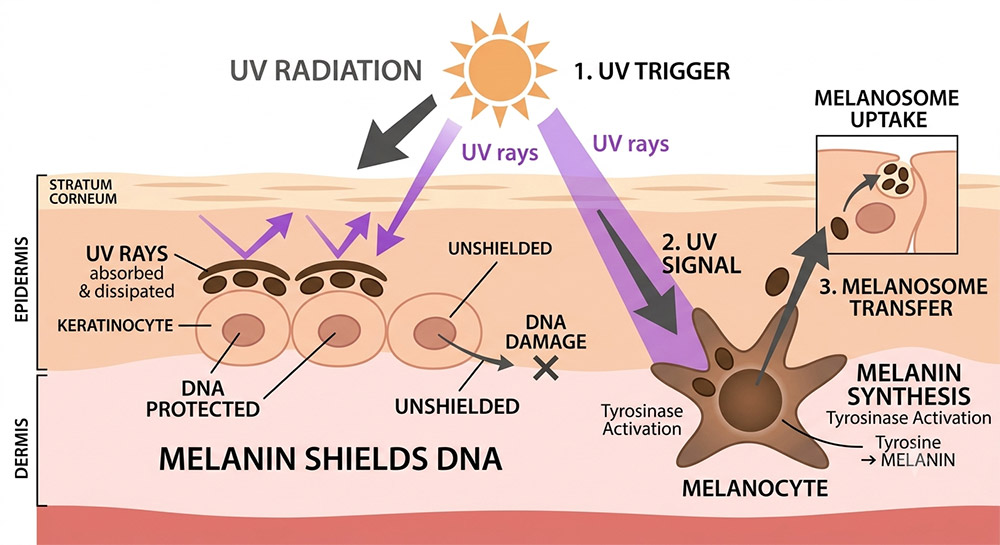
The skin’s response to UV light happens well beneath the surface, long before pigmentation becomes visible.
Why Does Sun-Related Pigmentation Take Years to Appear?
Pigmentation caused by the sun rarely develops after a single day outdoors. It tends to build gradually, with each unprotected exposure adding to changes that remain hidden well below the surface. This is part of why pigmentation can appear suddenly when it finally emerges, even though the process began much earlier.
Someone who notices pigmentation in their thirties or forties may be seeing the result of sun exposure from childhood, long before daily sun protection was part of the routine. Understanding this timeline reframes pigmentation from a sudden concern into something that has been developing quietly for years.
Common Forms of UV-Related Pigmentation
- Solar lentigines (sun spots) — flat, well-defined brown patches caused by cumulative UV exposure, typically on sun-exposed areas like the face, hands, and shoulders
- Melasma — larger, symmetrical patches of darker pigmentation, often triggered by hormonal changes, pregnancy, or sun exposure
- General uneven tone or mottling — diffuse, less well-defined pigment variation without a single identifiable cause
What Other Factors Influence Pigmentation?
Sun exposure is the most significant factor in most cases, though it rarely acts alone. A combination of other elements usually shapes how visible pigmentation becomes and how it behaves once it appears. While sun exposure is a significant factor, pigmentation may also be influenced by:
- Skin type and how much natural melanin is already present
- Genetics and a family history of pigmentation
- Hormonal factors, which can influence certain types of pigmentation
- How often and how intensely the skin has been exposed to the sun
- Daily sun protection and general skincare habits
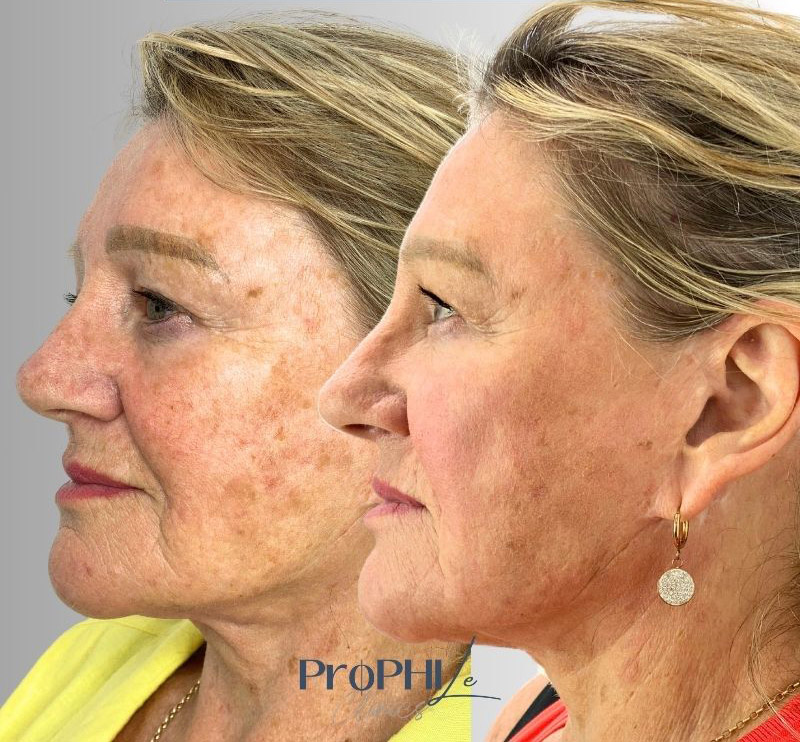
How pigmentation presents varies from person to person, shaped by genetics, hormones and sun exposure together.
Supporting Skin After Sun Exposure
Sun-related changes cannot be undone overnight, but certain habits may help support skin going forward. Consistent sun protection matters most, as it can reduce the likelihood of new pigmentation forming even where past changes are already visible. Guidance from Cancer Council Australia on daily sun protection is a useful reference for building this into an everyday routine. A simple, consistent skincare routine can support overall skin health alongside this, and for those looking to address existing pigmentation, exploring pigmentation treatment options with a qualified professional may also help.
Pigmentation rarely develops in isolation. It is usually part of a wider pattern of sun-related change, which is why protection is best treated as a daily habit rather than a response to visible pigmentation alone. This approach tends to produce more consistent results over the years that follow.
When to See a Professional About Pigmentation
Pigmentation varies considerably from person to person in depth, cause and appearance, which is why it’s often grouped under the broader term uneven skin tone, and where a professional assessment can add real clarity. Our team at Prophile Clinics can assess pigmentation as part of a broader skin consultation, taking skin type, sun exposure history and individual goals into account. From there, we can talk through what may be worth considering.
Key Takeaways on UV Exposure and Pigmentation
- Pigmentation, including solar lentigines, melasma and general uneven tone, is usually linked to cumulative sun exposure, though hormonal and other factors can also play a role.
- Daily sun protection is the single most effective habit for reducing new pigmentation, even where past changes are already visible.
- A consistent skincare routine can support overall skin health alongside sun protection.
- Because pigmentation varies from person to person, a professional skin consultation is the best way to understand your specific presentation and pigmentation treatment options.
UV exposure and pigmentation are linked through a process that can take years to become fully visible. Keeping that timeline in mind can help make sense of changes in your own skin and can make sun protection feel like a habit worth maintaining rather than a reaction to pigmentation that has already appeared.
If you have noticed changes in your skin tone and would like to understand what may be contributing to them, our team is happy to discuss your options with you during a consultation.
How to Book an Appointment
To book an appointment, please call us on +61485 960 001, email us at admin@prophileclinics.com.au, or book online via the form below.
Frequently Asked Questions About UV Exposure and Pigmentation
Does sun exposure influence pigmentation?
Yes, sun exposure is one of the main contributing factors to pigmentation. UV light can trigger melanin-producing cells to increase pigment output, which may lead to uneven skin tone or visible patches over time, particularly with repeated or unprotected exposure.
Can pigmentation appear years after sun exposure?
Yes, pigmentation is not always immediately visible. Changes within the skin tend to build up gradually, meaning pigmentation noticed later in life may relate to cumulative sun exposure from much earlier years.
How can further UV-related pigmentation be reduced?
Consistent sun protection, including broad-spectrum sunscreen and general sun-safe habits, may help reduce the likelihood of further pigmentation forming. A professional skin assessment can also help identify additional contributing factors.
Is pigmentation the same as sun damage?
Not quite. Sun damage is a broader term covering a range of changes UV exposure can cause, including pigmentation, texture changes and premature skin ageing, so pigmentation is generally considered one visible expression of wider sun damage.
Can pigmentation develop in areas that rarely see direct sun?
Yes. It is less common, but not impossible, particularly where other contributing factors, such as hormones or skin sensitivity, are involved. Areas with regular, even minor, sun exposure tend to be affected most often.
Does sunscreen still matter on cloudy days or indoors near windows?
Yes, UV rays can penetrate cloud cover and glass to some degree, so pigmentation-related exposure is not limited to obviously sunny days spent outdoors. Consistent daily protection is generally considered more effective than protection applied only when the sun feels strong.
Can pigmentation fade without any treatment?
Some superficial pigmentation may soften gradually over time, particularly with consistent sun protection. Deeper or long-standing pigmentation is less likely to fade fully on its own, which is where a professional assessment can help clarify what to expect.
Are certain skin types more prone to UV-related pigmentation?
Skin type can influence how visibly pigmentation develops, with some skin types more prone to noticeable changes following sun exposure than others. This is one of the factors we take into account during a skin consultation.
Can pigmentation return after it has faded?
Yes, pigmentation can return if the original triggers, such as ongoing sun exposure, are still present. This is part of why long-term sun protection is generally considered more effective than short-term fixes.
How is UV-related pigmentation different from melasma?
While both involve changes in melanin production, melasma is typically linked more closely to hormonal factors and can be triggered or worsened by UV exposure rather than caused by it alone. The two are often assessed together, since sun protection plays a role in managing both.

August 25, 2026

August 18, 2026

August 11, 2026

August 4, 2026

July 22, 2026
 Online Marketing For Doctors

