
Sun-Induced vs Natural Ageing: How Skin Changes With Age
Last updated on October 6, 2026
Skin changes with age through two separate processes: natural ageing, which is driven by an internal decline in collagen and elastin, and sun-induced ageing, which is driven by cumulative UV exposure and concentrates on the skin that gets the most sun.
Understanding How Skin Changes With Age
Someone in their fifties who has protected their skin for decades can sometimes look younger around the eyes than a person twenty years younger who hasn’t. That gap comes down to two separate processes: natural ageing, which happens to everyone and sun-induced ageing, which develops mostly from UV exposure.
These two processes respond to different factors, and understanding how skin changes with age means understanding both. Natural ageing follows a biological timeline that can’t be changed. Sun-induced ageing responds to daily habits and long-term sun protection, which is worth knowing before assuming nothing can be done.
What Is Natural, Chronological Ageing?
Natural ageing, also called intrinsic or chronological ageing, affects everyone regardless of sun exposure, driven by a gradual decline in collagen and elastin production. This happens at a similar pace across the whole body, including skin that’s rarely exposed to daylight. Visible signs include a gradual loss of firmness, fine lines around areas of frequent movement and mild volume loss in the cheeks and temples.
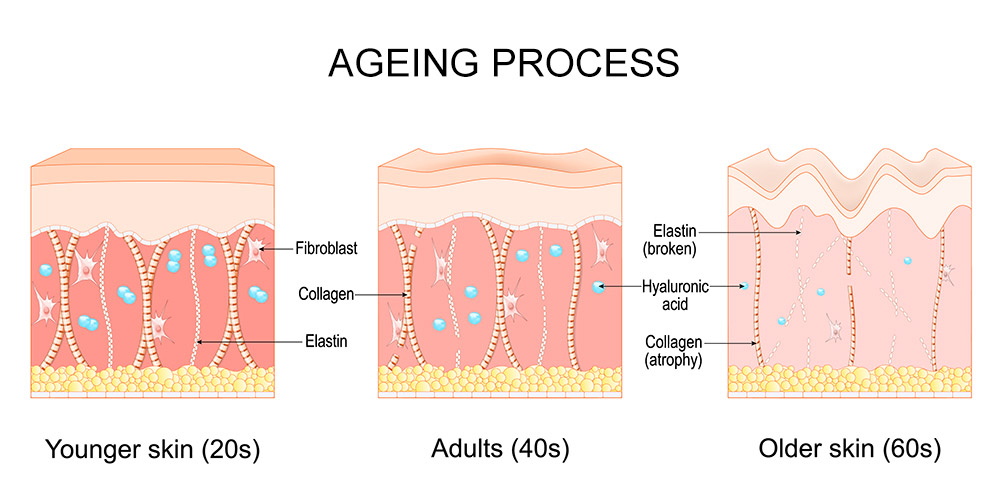
Natural ageing progresses evenly across the body, while sun-induced ageing concentrates on exposed skin.
What Is Sun-Induced Ageing (Photoageing)?
Sun-induced ageing, or photoageing (also called extrinsic ageing), is driven by UV exposure rather than time alone. UVA and UVB radiation break down collagen and elastin faster than natural ageing does on its own, which is why sun-exposed skin often looks more aged than protected skin of the same age. This process concentrates on areas that receive the most sun over a lifetime, such as the face, neck, chest and hands.
Key Differences Between Natural and Sun-Induced Ageing
Natural ageing and sun-induced ageing can look similar at a glance, but they’re usually distinguishable once you know what to look for. The clearest differences come down to:
| Aspect | Natural Ageing (Intrinsic) | Sun-Induced Ageing (Extrinsic / Photoageing) |
|---|---|---|
| Cause | Internal biological decline | Cumulative UV damage |
| Pace | Progresses steadily over decades | Can accelerate visible changes well beyond natural timing |
| Location | Affects the whole body evenly | Concentrates on sun-exposed areas (face, neck, chest, and hands) |
| Texture | Subtle volume loss and fine lines | Deeper wrinkles, roughness, and uneven pigmentation |
| Prevention | Cannot be stopped or slowed | Often responds effectively to consistent sun protection |
How to Tell Sun-Induced Ageing From Natural Ageing
Deeper wrinkles around the eyes and mouth, a rough or thickened skin texture, visible broken capillaries and uneven pigmentation point more strongly to sun exposure than to natural ageing. If changes appear evenly across the face and body, rather than concentrating on sun-exposed areas, they’re more likely to reflect natural ageing on its own.
Most people show a mix of both, which is why the distinction isn’t always obvious without a trained eye. Many of these signs overlap with broader sun damage, which is often assessed alongside ageing during a skin consultation.
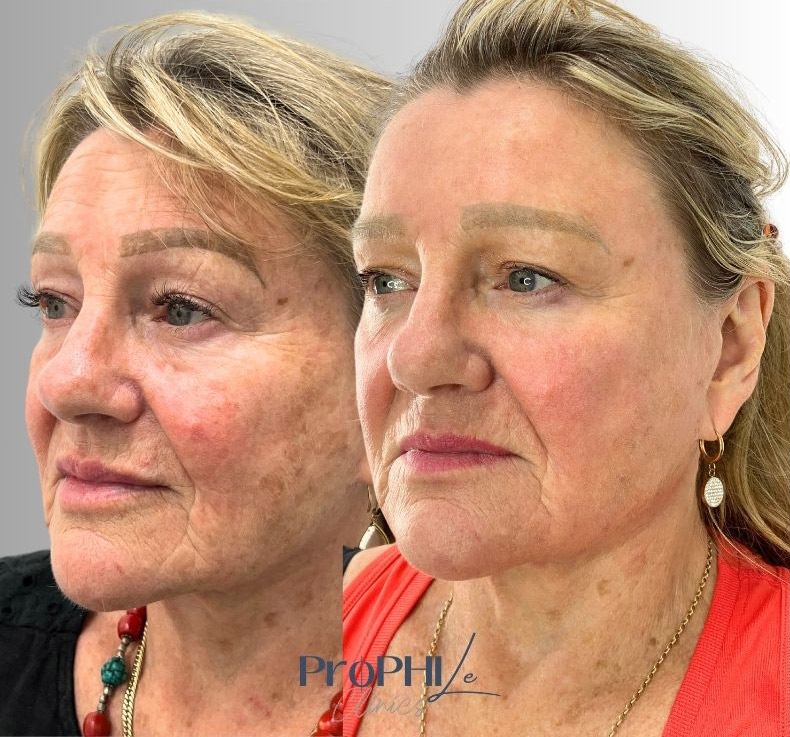
The pattern and location of visible changes often reveal how much of a role sun exposure has played.
Can Daily Habits Change the Rate of Ageing?
Natural ageing follows its own timeline regardless of lifestyle. The sun-induced component responds far more directly to daily habits. Consistent sun protection, including daily sunscreen and avoiding peak UV hours, may help slow how quickly photoageing develops, even in skin that has already had years of exposure. For those looking to address existing changes, professional skin treatment options can be discussed as part of a broader approach.
Other factors such as smoking, diet and general hydration are thought to play a smaller supporting role. A consistent approach over years, rather than months, tends to make the most noticeable difference to the sun-related component specifically.
Why Two People the Same Age Can Look Different
Genetics, skin tone and lifestyle sun exposure all shape how visible ageing becomes, which is why two people born the same year can present quite differently. Someone with a longer history of sun protection may show comparatively little photoageing even as natural ageing continues quietly in the background.
Someone with a long history of unprotected exposure, by contrast, may show pronounced sun-induced change layered on top of the same natural process. This is part of why ageing can’t be judged purely by a birth date and why two patients the same age can end up with quite different conversations about what’s realistic to address.
Getting a Clearer Picture of Your Own Skin
Natural and sun-induced ageing often overlap enough that telling them apart isn’t always straightforward without a trained eye. Our team at Prophile Clinics can assess skin ageing as part of a broader consultation, factoring in sun exposure history, skin type and personal goals before talking through what may be worth considering.
Knowing which process is driving the changes you’ve noticed also sets realistic expectations from the start. Chronological ageing will continue regardless of daily habits, but the sun-related component often responds well to consistent protection, which is worth understanding clearly before deciding what to do next.
How to Book an Appointment
To book an appointment, please call us on +61485 960 001, email us at admin@prophileclinics.com.au, or book online via the form below.
Frequently Asked Questions About How Skin Changes With Age
What is the difference between sun-induced and natural ageing?
Natural ageing is driven by internal biological processes and affects the whole body gradually. Sun-induced ageing is driven by cumulative UV exposure and concentrates on areas that receive the most sun.
Which signs of ageing are linked to sun exposure?
Deeper wrinkles, rougher texture, visible broken capillaries and uneven pigmentation are more commonly linked to sun exposure than to natural ageing alone. These signs also tend to concentrate on areas that receive regular sun, such as the face, neck and hands, rather than appearing evenly across the body.
Can daily habits influence sun-related ageing?
Yes, consistent sun protection and considered skincare may help slow sun-induced ageing. Natural ageing follows its own biological timeline regardless of daily habits.
Does sun-induced ageing affect everyone equally?
No, it reflects individual sun exposure history, skin type and how consistently protection has been used. This is why people of the same age can show quite different levels of sun-related change when assessed side by side.
Can sun damage make natural ageing appear more advanced?
Yes, sun-induced changes often layer on top of natural ageing, which can make overall signs of ageing appear more pronounced than chronological age alone would suggest. This layering effect is part of why two people the same age can look noticeably different.
Is it possible to slow down natural ageing?
Natural ageing can’t be stopped, since it’s driven by internal biological processes. Supporting overall skin health through hydration and gentle skincare may help skin look its best as this continues.
At what age does sun-induced ageing typically become noticeable?
Sun-induced ageing typically becomes noticeable in the mid-to-late twenties to thirties, though this varies considerably depending on sun exposure history, with some people noticing changes in their twenties and others considerably later. Consistent sun protection from an early age tends to delay when these signs become visible.
Can skincare products reduce the appearance of sun-induced ageing?
Yes, ingredients like retinoids, vitamin C, and niacinamide can improve texture, fine lines, and uneven tone from sun damage, though they can’t fully reverse deeper skin changes. Daily sunscreen remains essential for prevention.
Some approaches may help support skin texture and appearance, though results vary. A professional consultation can help identify what may be worth considering for your skin.
Some approaches may help support skin texture and appearance, though results vary. A professional consultation can help identify what may be worth considering for your skin.
Is sun-induced ageing reversible?
Sun-induced changes can’t be fully reversed, though their appearance may be supported through professional treatment and consistent protection going forward. A consultation can help clarify realistic expectations based on your own skin and sun exposure history.
Does skin tone affect how visible sun-induced ageing becomes?
Skin tone can influence how visibly certain signs appear, though all skin tones can be affected by cumulative UV exposure to some degree. This is one of several factors considered during a professional skin assessment.

August 25, 2026

August 18, 2026

August 11, 2026

August 4, 2026

July 22, 2026
 Online Marketing For Doctors

