

Freckles vs Age Spots vs Sun Spots: How to Tell Them Apart
Last updated on October 6, 2026
Freckles, age spots and sun spots are three common terms for two distinct types of pigmentation. Freckles are genetically influenced marks that darken with sun exposure and fade when it drops, while age spots and sun spots are two everyday names for the same thing: solar lentigines, which are linked to cumulative UV exposure and stay visible year-round.
A freckle that has been present since childhood and a sun spot that appeared much later can look almost identical at first glance, despite developing for different reasons. Freckles are strongly influenced by genetics and the skin’s response to UV exposure, while age spots reflect the cumulative effects of sun exposure over time.
What Is the Difference Between Freckles, Age Spots and Sun Spots?
Below we cover freckles vs age spots vs sun spots in detail, including how each develops, how they behave and why identifying pigmentation correctly matters before any cosmetic treatment is considered.
What Are Freckles?
Freckles, medically known as ephelides, are small, flat areas of pigmentation that often first appear during childhood. They are strongly influenced by genetics and tend to be more noticeable in people with fair skin and red or blonde hair, although they can occur across different skin tones. UV exposure causes freckles to darken, which is why they often become more visible during summer.
One of their most recognisable features is that they may fade during periods of lower UV exposure. Freckles themselves are generally harmless, but consistent sun protection remains important because they show that the skin responds readily to ultraviolet light.
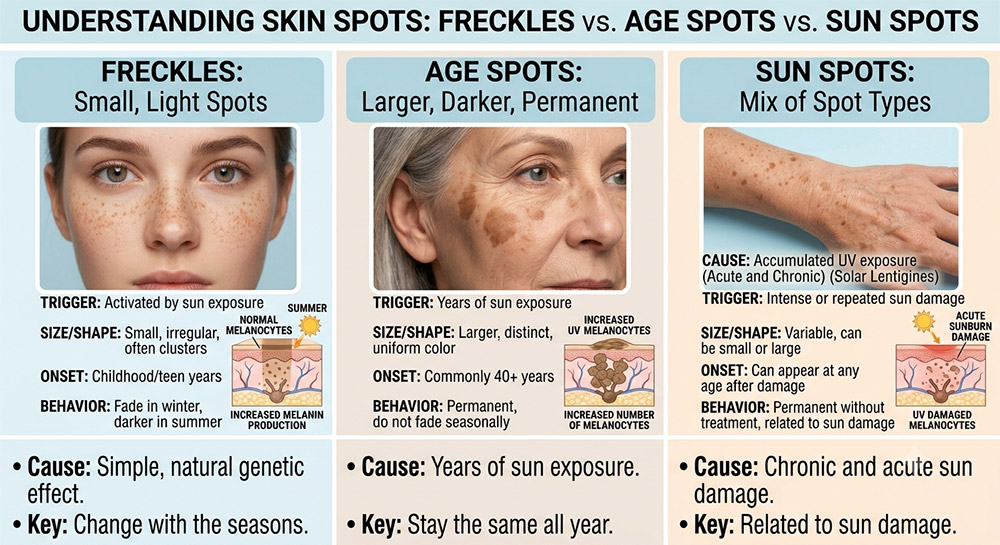
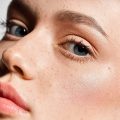
Freckles often become more noticeable in summer and fade again once UV exposure drops.
What Are Age Spots and Sun Spots?
Age spots, sun spots and liver spots are three everyday names for the same type of pigmentation, medically known as solar lentigines. They are flat, well-defined marks associated with cumulative UV exposure and tend to become more prevalent with age, particularly in areas that have received substantial sun exposure over time.
Unlike freckles, solar lentigines generally remain visible throughout the year once they have formed, although their colour may vary slightly. They often appear on the face, hands, shoulders, chest and other sun-exposed areas and may range from light to dark brown.
What Tells Freckles, Age Spots and Sun Spots Apart?
Although freckles, age spots and sun spots are sometimes discussed as three separate types of pigmentation, they represent only two distinct categories. Freckles develop through a combination of genetic predisposition and UV exposure, while age spots and sun spots are both terms for persistent pigmentation linked to cumulative sun exposure.
| Characteristic | Freckles (Ephelides) | Age Spots / Sun Spots (Solar Lentigines) |
|---|---|---|
| Onset | Often first appear in childhood | Tend to develop later in life |
| Genetics | Strongly influenced by inherited characteristics | More closely associated with cumulative UV exposure |
| Seasonal behaviour | May darken in summer and fade during periods of lower UV exposure | Tend to remain visible year-round |
| Persistence | Can fade over time or with reduced sun exposure | Generally more persistent once they have formed |
| Location | Appears on sun-exposed skin | Particularly associated with areas that have received repeated UV exposure over many years |
Why the Difference Between Freckles and Sun Spots Matters
Understanding the distinction provides useful context about why pigmentation has appeared and how it may behave. Freckles reflect a genetically influenced response to UV light, whereas age spots and sun spots are more established areas of pigmentation associated with cumulative exposure. Neither type automatically indicates that something is wrong, but they do not develop in the same way.
The distinction can also influence how pigmentation is assessed and whether cosmetic treatment may be appropriate. Pigmented marks cannot always be identified reliably from appearance alone, and freckles, solar lentigines and other skin lesions can sometimes resemble one another. A new, changing or unusual mark should therefore be medically assessed rather than assumed to be a freckle or sun spot.
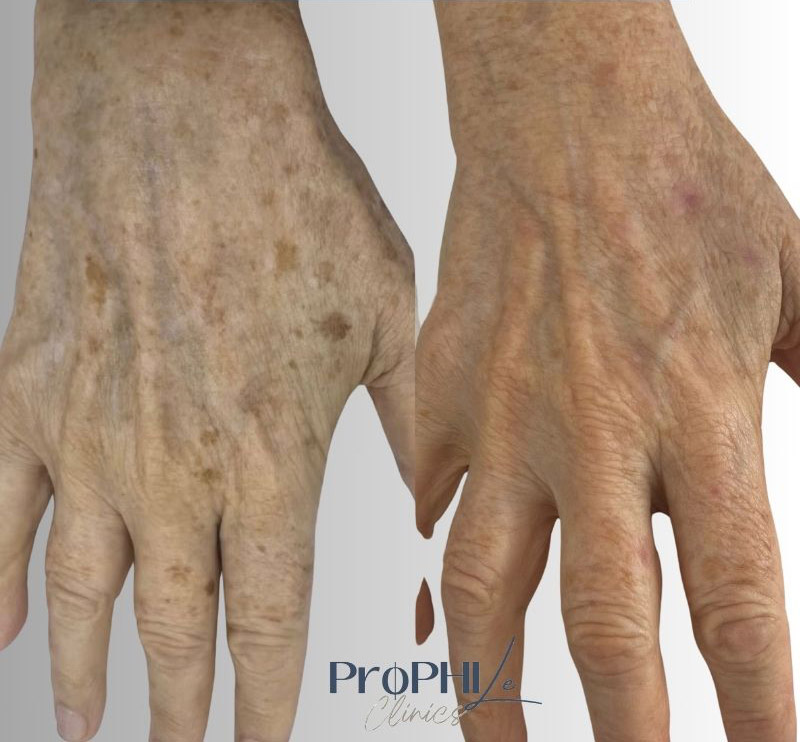
Freckles and sun-related pigmentation reflect different patterns of skin response and UV exposure over time.
When Should Pigmentation Be Assessed by a Professional?
A pigmented mark should be medically assessed if it changes in size, shape or colour, develops an irregular appearance, becomes painful or itchy, bleeds or looks noticeably different from the marks around it. New or uncertain pigmentation should also be checked rather than treated on the assumption that it is harmless.
Where the nature of a mark is unclear, medical assessment should take priority over cosmetic treatment. A cosmetic consultation may help determine whether an area appears suitable for treatment, but it should not replace review by a GP or dermatologist where further investigation may be needed.
Can Freckles and Sun Spots Be Treated?
Neither freckles nor solar lentigines require treatment simply because they are present. Some people may nevertheless choose to reduce visible pigmentation for cosmetic reasons, and selected laser or light-based treatments may be considered following an appropriate assessment.
Treatment planning differs according to the type of pigmentation, the skin and the area being treated. Freckles may lighten but become visible again with further UV exposure, while solar lentigines tend to be more persistent once established. Outcomes vary, repeat treatment may be needed, and new pigmentation can still develop over time.
How to Reduce the Chances of Further Sun Spots
Consistent sun protection may help limit the darkening of existing freckles and reduce the likelihood of further sun-related pigmentation developing. Broad-spectrum sunscreen, protective clothing, shade and avoiding unnecessary exposure during periods of high UV remain relevant regardless of which type of pigmentation is present.
These measures cannot guarantee that freckles or age spots will not appear, particularly where genetics or previous sun exposure play a role. However, they remain an important part of protecting the skin from further cumulative UV exposure and supporting its overall health.
Key Takeaways: Freckles vs Age Spots vs Sun Spots
- Freckles, age spots and sun spots are three familiar terms, but they describe only two main forms of pigmentation.
- Freckles are genetically influenced and change with seasonal UV exposure, while age spots and sun spots are two names for persistent solar lentigines.
- Understanding the distinction makes it easier to recognise changes and seek appropriate advice when necessary.
At Prophile Clinics, pigmentation is assessed before cosmetic treatment is considered, with medical review recommended where the nature of a mark requires further investigation.
How to Book an Appointment
To book an appointment, please call us on +61485 960 001, email us at admin@prophileclinics.com.au, or book online via the form below.
Frequently Asked Questions About Freckles, Age Spots and Sun Spots
Are sun spots and age spots the same thing?
Yes. Sun spots and age spots are everyday terms for solar lentigines, which are persistent areas of pigmentation associated with cumulative UV exposure. The terminology may vary, but both names generally describe the same type of skin mark.
Do freckles fade over time?
Freckles often become less visible during periods of lower UV exposure and may fade during the cooler months. Some may also become less prominent with age, although their appearance varies between individuals, and they can darken again following further sun exposure.
Can sun spots appear without recent sun exposure?
Yes. Sun spots reflect cumulative UV exposure over time rather than only recent time spent in the sun. They may therefore become noticeable after years of exposure and generally remain visible even when someone later becomes more consistent with sun protection.
Are freckles a sign of sun damage?
Not exactly. Freckles are strongly influenced by genetics, but become darker and more numerous in response to UV exposure. They are not the same as solar lentigines, which are more directly associated with cumulative photodamage, although freckle-prone skin still requires consistent sun protection.
Can age spots be prevented?
Consistent sun protection may reduce the likelihood of additional solar lentigines developing, although it cannot reverse previous UV exposure or guarantee that no new marks will appear. Protective clothing, shade and sunscreen all contribute to reducing further exposure.
Do freckles run in families?
Yes. The tendency to develop freckles is strongly influenced by genetics and is particularly associated with fair skin and red or blonde hair. UV exposure still affects how dark or noticeable the freckles become.
Can sun spots change in size or colour over time?
Solar lentigines may gradually become larger, darker or more numerous with continued UV exposure. However, a spot that changes noticeably in size, shape, colour or texture should be medically assessed rather than assumed to be an ordinary sun spot.
Is sunscreen effective at preventing further sun spots?
Regular use of broad-spectrum sunscreen may help reduce further UV exposure and lower the likelihood of additional sun-related pigmentation developing. It is most useful when combined with shade, protective clothing and avoiding prolonged exposure during periods of high UV.
Can freckles and sun spots occur together?
Yes. A person can have both freckles and solar lentigines, particularly in areas that receive regular sun exposure. Their presence together can make visual identification more difficult, which is one reason uncertain pigmentation may require professional assessment.
Should a changing freckle or sun spot be checked?
Yes. Any mark that is new, changing, irregular, itchy, painful, bleeding or noticeably different from surrounding spots should be assessed by a doctor. Cosmetic treatment should not be used to address a mark until there is reasonable confidence about what it is.

August 25, 2026

August 18, 2026

August 11, 2026
August 4, 2026
July 22, 2026
 Online Marketing For Doctors

