
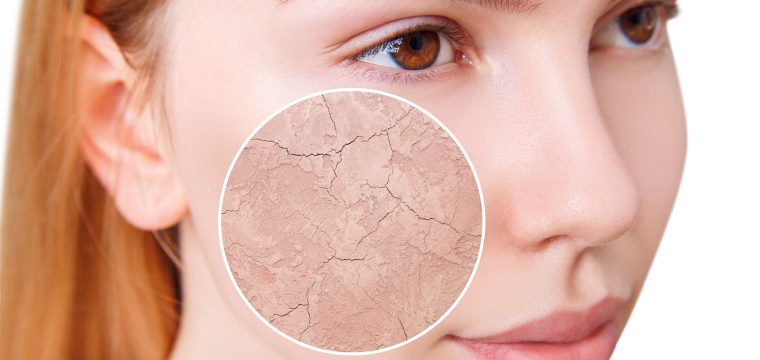
Dry vs Dehydrated Skin: How to Tell the Difference
Last updated on October 6, 2026
Dry skin and dehydrated skin are not the same thing. Dry skin is a skin type, meaning the skin produces less natural oil and tends to feel rough or flaky over the long term. Dehydration is a temporary condition, meaning the skin is short of water, and it can affect any skin type including oily skin.
Tightness, roughness and discomfort can make it seem obvious that your skin is dry. However, similar changes may also appear when the skin is temporarily struggling to retain enough moisture, a concern often described in skincare as dehydration. Because the two can look and feel alike, choosing richer products does not always address the underlying issue.
What Is the Difference Between Dry and Dehydrated Skin?
Understanding dry vs dehydrated skin can make it easier to build a suitable routine. Dry skin is often associated with lower natural oil production, while dehydration describes a temporary lack of water within the skin. Either concern can be influenced by the environment, skincare habits and the condition of the skin barrier.
Is Dry Skin a Skin Type or a Temporary Condition?
In skincare terminology, dry skin is generally described as a skin type, while dehydration is considered a temporary condition. Dry skin often produces less natural oil and may feel persistently rough or flaky. Dehydration relates more closely to water loss, driven by a process known as transepidermal water loss (TEWL), and can affect dry, oily or combination skin.
The distinction is useful, but it is not always as simple as oil versus water. Dry skin can also struggle to retain moisture, while dehydrated skin may still appear oily on the surface. It is therefore possible to experience both concerns at the same time.
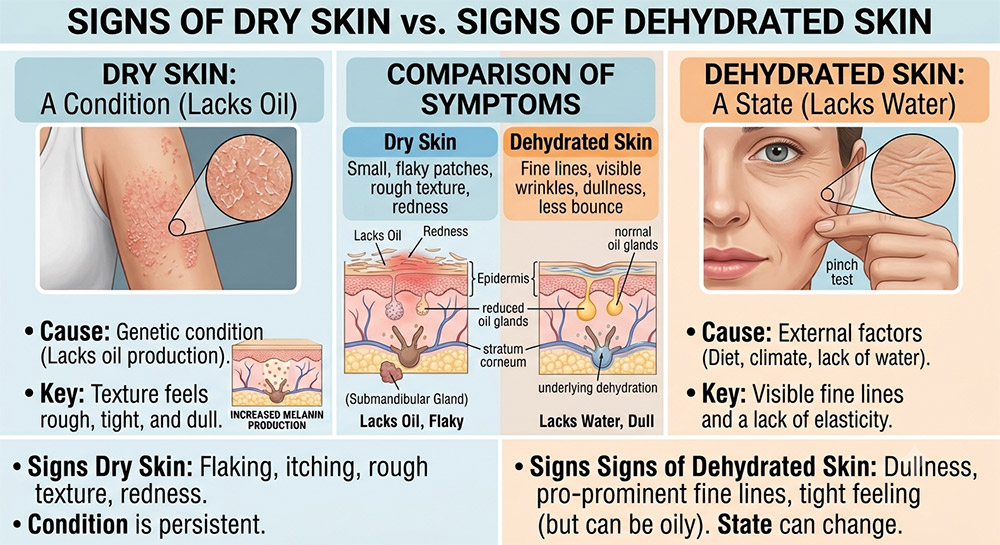
Dry skin is often an ongoing characteristic, while dehydration can temporarily affect any skin type.
What Are the Signs of Dry vs Dehydrated Skin?
Although appearance alone cannot always confirm the cause, these changes often fluctuate depending on weather, indoor heating, air conditioning or recent skincare habits.
| Feature | Dry Skin | Dehydrated Skin |
|---|---|---|
| How it feels | Consistently rough, flaky, or uncomfortable | Tight, dull, or more sensitive than usual |
| Presence of oil | Lacks natural oil/sebum | Oil may still be present on the surface |
| Fluctuation pattern | Persistent; tends to worsen over time or with age | Fluctuates frequently based on environment |
| Common triggers | Age, cold weather, harsh cleansing | Weather changes, indoor heating, air conditioning, recent skincare habits |
What Can Affect Skin Moisture?
Several everyday factors can contribute to dryness, dehydration or disruption of the skin barrier:
- Weather: Cold temperatures, wind, heat and low humidity can increase moisture loss.
- Indoor conditions: Heating and air conditioning can leave the skin feeling tight or uncomfortable.
- Cleansing habits: Hot water, frequent washing and strong cleansers can remove protective surface oils.
- Over-exfoliation: Excessive use of acids, scrubs or active ingredients may contribute to irritation and water loss.
- Skincare choices: Products that are too harsh or unsuitable for the skin may worsen dryness or sensitivity.
How to Support the Skin Barrier
The skin barrier helps retain water while protecting the skin from irritation and environmental exposure. When it becomes disrupted, moisture escapes more easily, which can make both dry and dehydrated skin feel tighter, rougher or more sensitive.
A simple routine is often the best starting point. Gentle cleansing, limited exfoliation and an appropriate moisturiser can help support moisture retention without overwhelming the skin. Naturally dry skin may prefer richer creams, while oily or combination skin may find lighter formulations more comfortable. Many products combine humectants such as hyaluronic acid and glycerin, which draw water into the skin, with occlusives such as ceramides, which help seal moisture in.
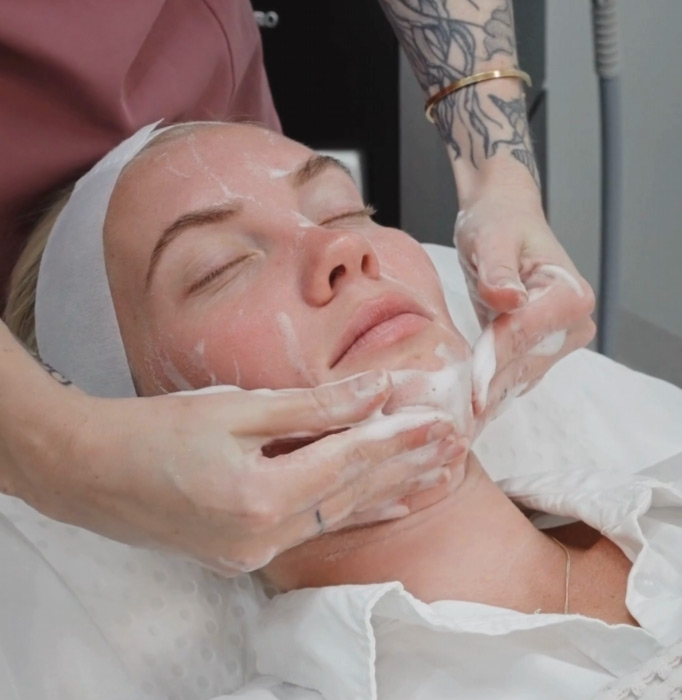
Environmental exposure and skincare habits can affect how effectively the skin retains moisture.
Can Dry and Dehydrated Skin Occur Together?
Yes. Someone with naturally dry skin may also experience temporary dehydration during cold weather, after over-exfoliation or while spending long periods in heated or air-conditioned environments. When both are present, tightness, flaking and sensitivity may become more noticeable.
Addressing the overlap generally means reducing irritation while using skincare that supports both hydration and the skin barrier. Persistent discomfort, inflammation or cracking may indicate something beyond ordinary dryness and should be assessed appropriately.
When Should Skin Dryness Be Assessed?
Professional advice may be useful when dryness, tightness or flaking continues despite a gentle routine and regular moisturising. Assessment is particularly important if the skin becomes persistently itchy, inflamed, painful, cracked, blistered or unusually sensitive, as these symptoms may be associated with irritation or an underlying skin condition. Seeking professional advice early can help identify the cause and prevent symptoms from becoming more difficult to manage.
A professional skin assessment can help determine whether ongoing dryness reflects a skin type, a temporary dehydration issue, or a separate condition that needs its own management approach. This is particularly useful where symptoms haven’t responded to changes in routine, or where the cause remains unclear.
Key Takeaways: Dry vs Dehydrated Skin
- Dry and dehydrated skin can feel very similar, but they are not always driven by the same factors.
- The most useful approach considers the skin’s usual characteristics, recent environmental exposure, skincare habits and any signs the barrier may be disrupted.
- A considered routine is generally more helpful than repeatedly adding new products.
Where symptoms persist or the cause remains unclear, a professional skin assessment can help identify what may be contributing and whether further medical review is appropriate.
How to Book an Appointment
To book an appointment, please call +61485 960 001, email us at admin@prophileclinics.com.au, or book online via the form below.
Frequently Asked Questions About Dry vs Dehydrated Skin
How do I know if my skin is dry or dehydrated?
Dry skin tends to feel consistently rough, flaky or lacking in natural oils, while dehydrated skin may feel temporarily tight, dull or sensitive despite still producing oil. The signs can overlap, particularly when the skin barrier is disrupted, so it may not always be possible to distinguish between them from appearance alone.
Can oily skin still be dehydrated?
Yes, because dehydration relates to the skin’s water content rather than how much oil it produces. Oily or combination skin may therefore appear shiny while still feeling tight, uncomfortable or unusually sensitive, particularly after cleansing or overusing active skincare products.
What helps support skin hydration?
Gentle cleansing, regular moisturising and avoiding excessive exfoliation can help the skin retain moisture more effectively. The most appropriate products will depend on the skin’s natural oil levels, sensitivity and whether the barrier is irritated or compromised.
Is dry skin always permanent?
Not necessarily. Some people naturally have a dry skin type, but dryness can also develop or become more noticeable because of ageing, climate, frequent washing, medication or disruption of the skin barrier.
Can dehydration make fine lines look more noticeable?
Temporary moisture loss can make existing fine lines appear more visible because the skin’s surface may look less smooth or supple. However, fine lines alone are not enough to confirm dehydration, as their appearance is also influenced by age, UV exposure and skin structure.
Does drinking more water fix dehydrated skin?
Adequate water intake supports general health, but drinking more water alone may not resolve tightness or discomfort caused by environmental exposure, barrier disruption or unsuitable skincare. A gentle topical routine that supports moisture retention is often also required.
Can weather affect skin hydration?
Yes, cold air, wind, heat and low humidity can all increase moisture loss from the skin. Indoor heating and air conditioning may have a similar effect, which is why the skin can feel noticeably different as the seasons or environment change.
Is dehydrated skin more noticeable in winter?
Dehydration may become more noticeable during winter because cold air and indoor heating can increase moisture loss. Similar changes can also occur during warmer months due to heat, air conditioning, sun exposure or more frequent cleansing.
Can the same products help dry and dehydrated skin?
Some products can support both concerns, particularly moisturisers that combine hydrating ingredients with emollients or occlusives that help reduce moisture loss. The most comfortable formulation will depend on whether the skin is naturally dry, oily, combination or particularly sensitive.
When should dry or dehydrated skin be professionally assessed?
Professional assessment may be useful when symptoms continue despite a gentle routine and regular moisturising. It is particularly important to seek advice if the skin becomes persistently inflamed, itchy, painful, cracked or unusually sensitive, as another skin condition may be contributing.

August 25, 2026
August 18, 2026
August 11, 2026
August 4, 2026

July 22, 2026
 Online Marketing For Doctors

