
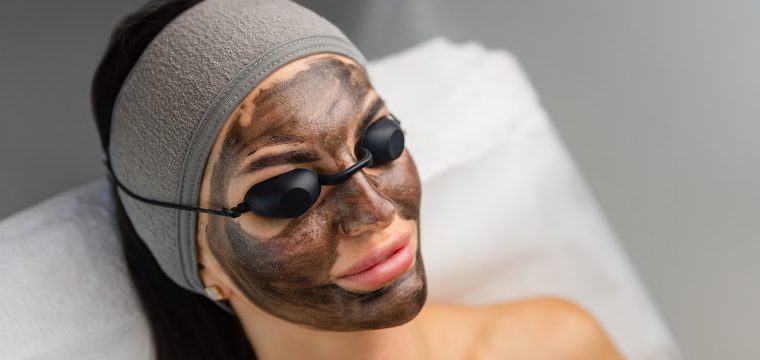
Carbon Laser Facial: What It Is and What to Expect
Last updated on October 6, 2026
A carbon laser facial combines a topical carbon lotion with laser energy in a treatment primarily considered for concerns involving oiliness, mild congestion, visible pores and uneven surface texture. Although it is sometimes called a carbon peel, it is a laser procedure rather than a chemical peel.
The treatment works at the surface rather than deep in the skin, which is why it involves less recovery than laser resurfacing and why the changes it produces are generally temporary. Whether it is appropriate depends on the concern being addressed, your skin, and the laser system and settings used.
How Does a Carbon Laser Facial Work?
A thin layer of carbon product is applied to cleansed skin and allowed to settle for a set period. Laser energy is then delivered across the treatment area, targeting the carbon particles on or close to the surface.
The laser rapidly heats or fragments the carbon, depending on the device and settings used. This creates a superficial treatment effect that may influence surface debris, oil and material around follicular openings. It does not draw toxins from the skin or physically extract every blockage from the pores.
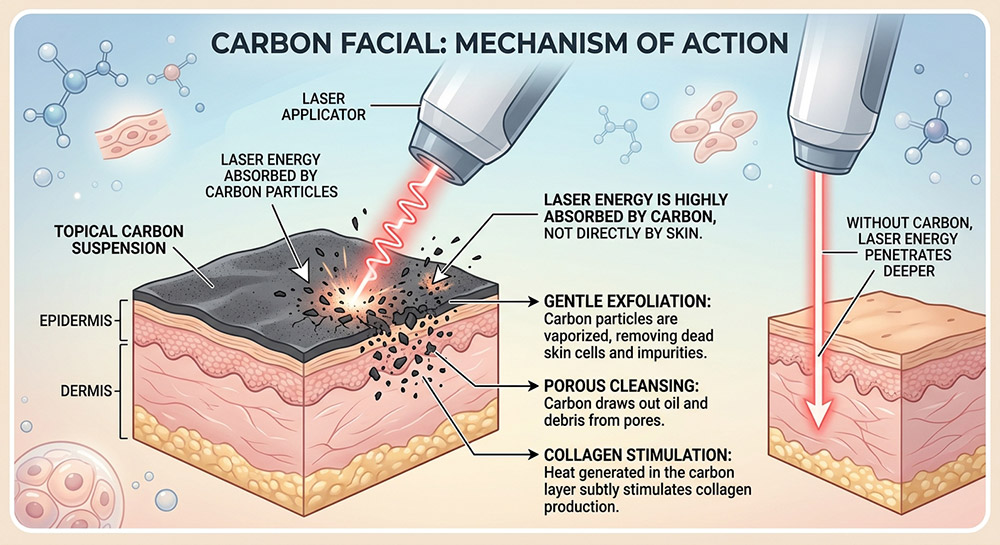
A carbon facial uses a topical carbon suspension to change how laser energy interacts with the skin’s surface.
What May a Carbon Laser Facial Help Address?
Carbon-assisted laser treatments have been investigated for concerns involving surface oil, congestion, visible pores and skin texture. The degree of change varies, and the treatment should not be expected to produce the same result for every person or with every laser system.
A carbon laser facial may be considered for:
- Excess surface oil
- Mild congestion
- The appearance of enlarged pores
- Selected acne-related concerns
- Dull or uneven-looking surface texture
What Happens During a Carbon Laser Facial?
Treatment begins with the skin being assessed, cleansed and prepared before a thin layer of carbon product is applied. Once the carbon has settled, suitable eye protection is provided, and the laser is passed across the treatment area using settings selected for your skin.
During the laser stage, you may experience warmth, tingling or a light snapping sensation. Any remaining carbon is removed afterwards, and suitable post-treatment skincare is applied before you are given instructions for caring for your skin at home.
Carbon Laser Facial Recovery and Possible Risks
A carbon laser facial may cause temporary redness, warmth, dryness, sensitivity or mild swelling while the skin settles. More significant complications are less frequent but remain possible, with risk influenced by the device, laser settings, recent sun exposure, skin colour and aftercare.
Possible carbon laser facial risks include:
- Prolonged redness or swelling
- Skin irritation or increased sensitivity
- Burns or blistering
- Temporary or persistent pigment changes
- Infection
- Scarring
- An unexpected reaction to the carbon product
ARPANSA, the Australian Radiation Protection and Nuclear Safety Agency, publishes advice for consumers on cosmetic laser and IPL treatments, including what to check before booking, since there are no Australia-wide requirements governing who may deliver these treatments.
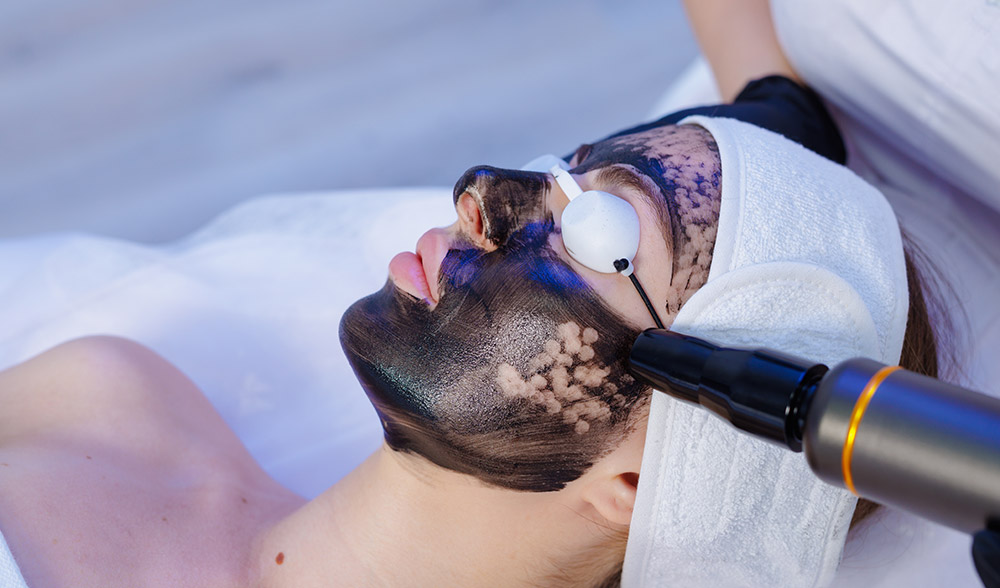
Skin condition, laser settings and aftercare can all influence recovery following a carbon laser facial.
Carbon Laser Facial vs Laser Resurfacing
| Property | AHA | BHA | PHA |
|---|---|---|---|
| Stands for | Alpha hydroxy acid | Beta hydroxy acid | Polyhydroxy acid |
| Common ingredients | Glycolic acid, lactic acid, mandelic acid | Salicylic acid | Gluconolactone, lactobionic acid |
| Solubility | Water-soluble | Oil-soluble | Water-soluble |
| Molecular size | Small to moderate | Small | Larger |
| Where it works | Skin surface | Skin surface and inside oily follicular openings | Mainly at the surface, more gradually |
| Often considered for | Rough texture, dullness, uneven-looking pigmentation | Oily or congested skin | Skin that tolerates other acids poorly |
| Tolerance note | Varies by individual acid and concentration | Can dry or irritate with frequent use | Often better tolerated, but not irritation-free |
Specific treatment parameters, outcomes, and recovery profiles depend directly on the individual device used, energy settings, and clinical protocol applied.
A carbon laser facial uses laser energy in combination with a layer of carbon applied to the skin, with the treatment focused largely on surface oil, congestion and texture. Laser resurfacing works directly on the skin, either removing microscopic areas of tissue or heating selected layers beneath the surface, depending on the technology used.
Resurfacing treatments may be considered for concerns such as pigmentation, fine lines, acne scarring or more noticeable texture changes, and can involve a longer recovery period. The exact difference depends on the devices and settings being compared, but the two treatments are not interchangeable simply because both use laser energy.
Is a Carbon Laser Facial Suitable for Everyone?
Treatment may need to be delayed if your skin is sunburnt, actively infected, broken or significantly inflamed. Recent tanning, an active cold sore, poor tolerance of everyday skincare or another recent laser or skin-renewal treatment may also affect suitability. Cancer Council Australia’s SunSmart guidance sets out how to protect your skin day to day, which is worth following before any laser treatment and consistently afterwards while the skin recovers
Pregnancy or breastfeeding, photosensitising medicines, previous pigment changes and a history of abnormal scarring should be disclosed. Different laser technologies and settings carry different considerations across skin tones, so suitability must be assessed using the actual equipment and protocol being proposed.
Carbon Laser Facial Treatment at Prophile Clinics
A carbon laser facial brings topical carbon and laser energy together in a relatively superficial treatment. It may provide a suitable option when the aim is to address oiliness, mild congestion, visible pores or uneven surface texture without undergoing a more intensive resurfacing procedure.
At Prophile Clinics, we assess your skin and the concerns you would like to address before recommending a treatment approach. If a carbon laser facial is suitable, we explain how the procedure will be performed, what recovery may involve and how to care for your skin afterwards.
Book a Carbon Laser Facial Consultation at Prophile Clinics
To book an appointment, please call us on +61 485 960 001, email admin@prophileclinics.com.au or use the online booking form below.
Carbon Laser Facial FAQs
Is a carbon laser facial the same as a chemical peel?
No. A carbon facial uses a topical carbon product with laser energy, while a chemical peel uses a chemical solution to create controlled exfoliation. Their mechanisms, risks and recovery requirements are different.
Does the carbon remain in the skin after treatment?
The carbon product is targeted and removed during the procedure, with any remaining residue cleansed from your skin afterwards. It is not intended to remain permanently within the pores or skin.
Does a carbon laser facial hurt?
You may experience warmth, tingling or a snapping feeling, depending on the device and settings used. Individual sensitivity varies, so the procedure should not be guaranteed to feel painless for everyone.
Is there downtime after a carbon facial?
Some people experience limited visible recovery, while others may develop redness, warmth, dryness or temporary sensitivity. The likely recovery should be based on the clinic’s protocol rather than a general promise of no downtime.
How many carbon facial treatments are needed?
There is no standard number that applies to every concern or treatment protocol. The proposed schedule should reflect the treatment purpose, your response to previous sessions and realistic expectations about how long any change may last.
Is a carbon laser facial suitable for every skin tone?
Not automatically. Laser wavelength, settings, recent sun exposure and individual pigmentation response all affect suitability and the possibility of post-treatment pigment changes.
Can a carbon facial treat acne?
Carbon-assisted laser treatment has been investigated for selected acne concerns, but acne varies in type, severity and cause. It should not replace medical assessment when acne is persistent, inflamed, painful or causing scars.
When can makeup be applied after treatment?
This depends on how your skin responds and the aftercare provided by the clinic. Makeup should be delayed if the skin remains hot, irritated, broken or unusually sensitive.
Can I have a carbon facial after recent sun exposure?
Recent tanning or sunburn may increase sensitivity and the risk of pigment changes following laser treatment. Disclose recent exposure so the practitioner can determine whether treatment should be delayed.
Are the results of a carbon laser facial permanent?
No permanent reduction in oil production, pore size or congestion should be assumed. Any visible change may be temporary, and its duration can vary according to the concern, treatment protocol and ongoing behaviour of your skin.

August 25, 2026

August 18, 2026

August 11, 2026

August 4, 2026

July 22, 2026
 Online Marketing For Doctors

